
Projects / 04
Saleria
Aggregation and salt: a salt shed and performance space
Saleria is an experiment in aggregation architecture: structures of many loose, identical elements held together by friction and geometry rather than permanent joints. The name joins the Italian “sale” and “-eria”: “the place of salt.” It continues my earlier project ESTA, where star-thistle-inspired interlocking modules were first tested as a self-supporting bridge.
An experiment in aggregation
Saleria is an experiment in aggregation architecture: structures of many loose, identical elements held together by friction and geometry rather than permanent joints. The name joins the Italian “sale” and “-eria”: “the place of salt.”

From ESTA to Saleria
It continues my earlier project ESTA, where star-thistle-inspired interlocking modules were first tested as a self-supporting bridge, widening the family of modules, testing new scales, using sand as formwork and adding salt crystallization.
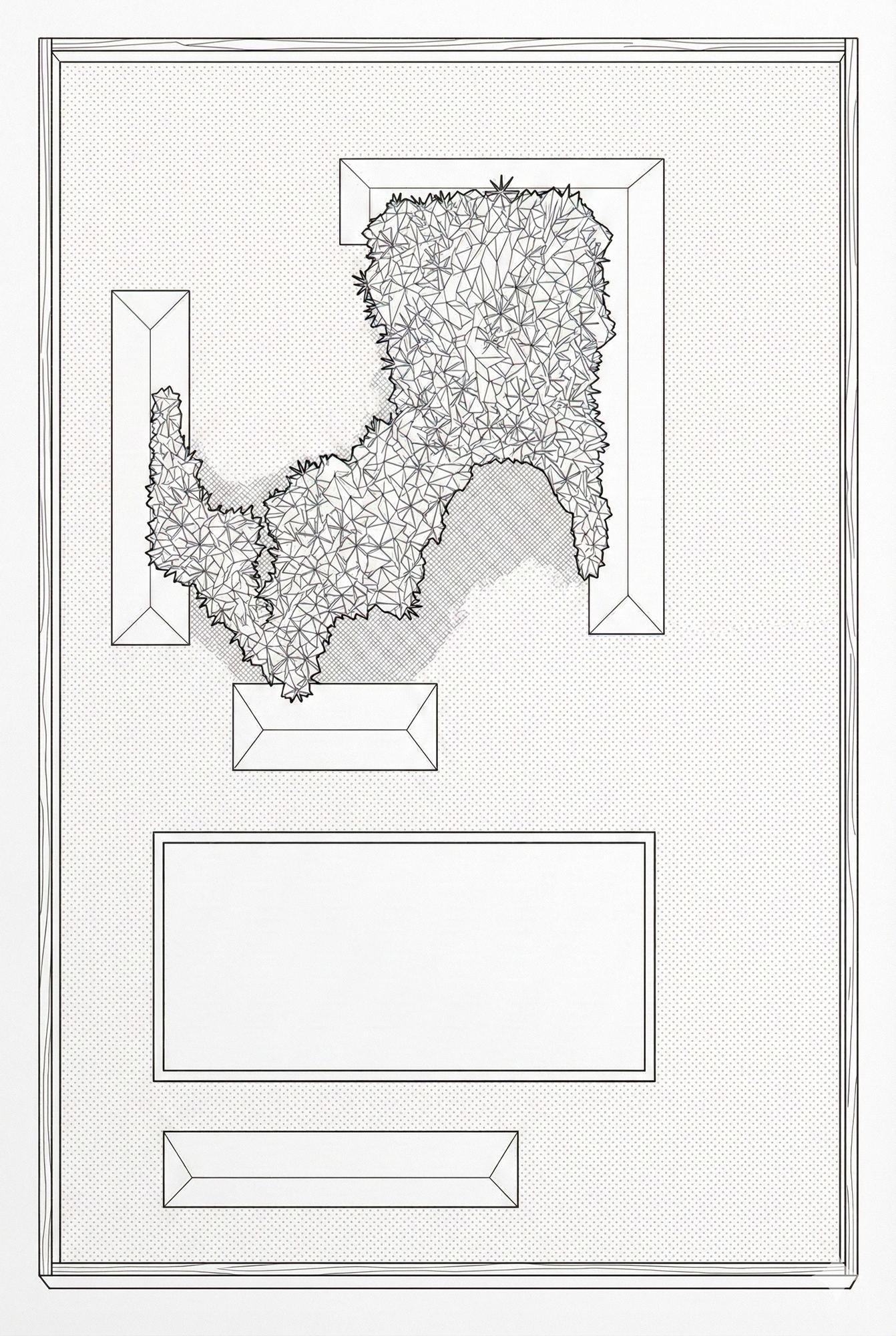
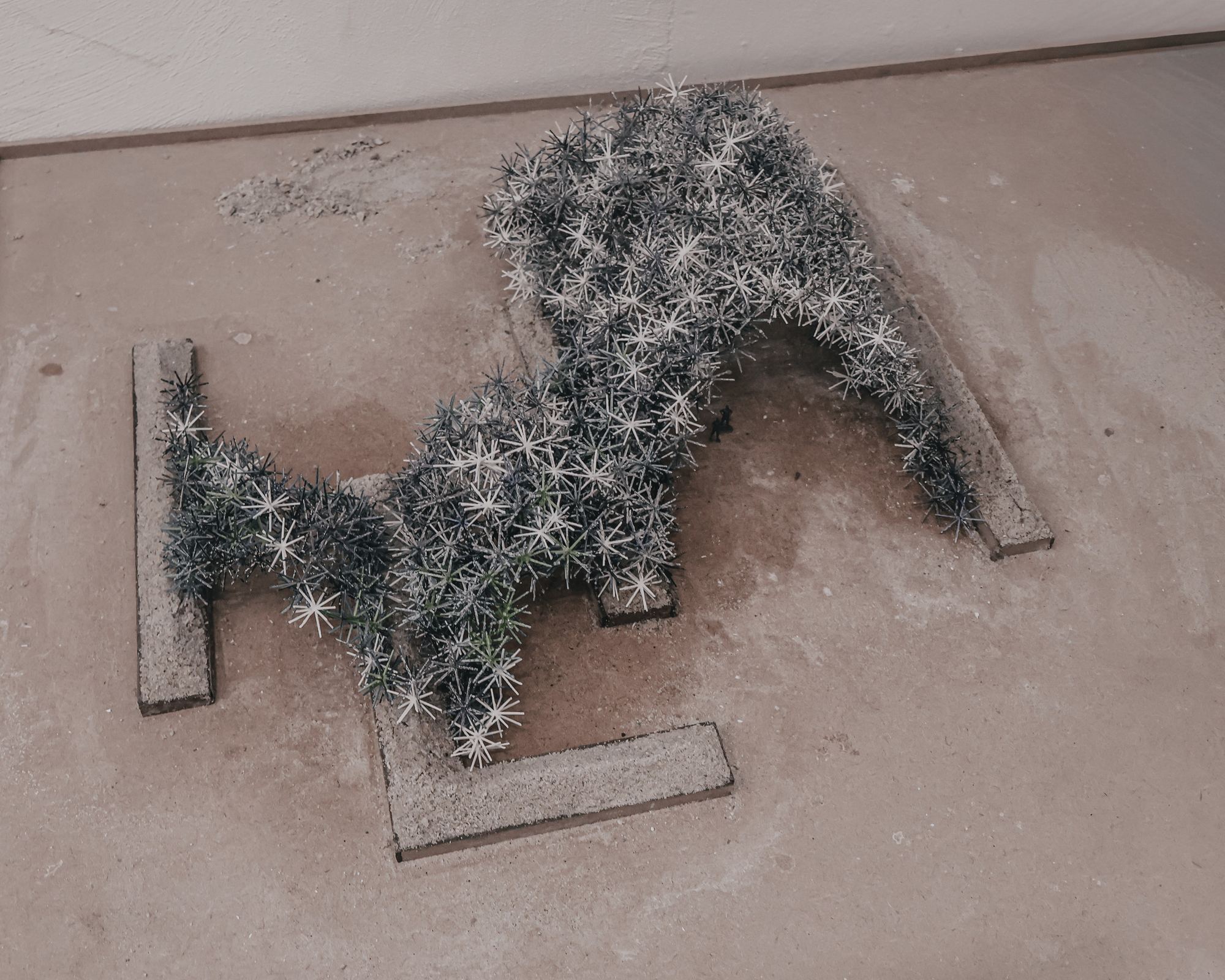
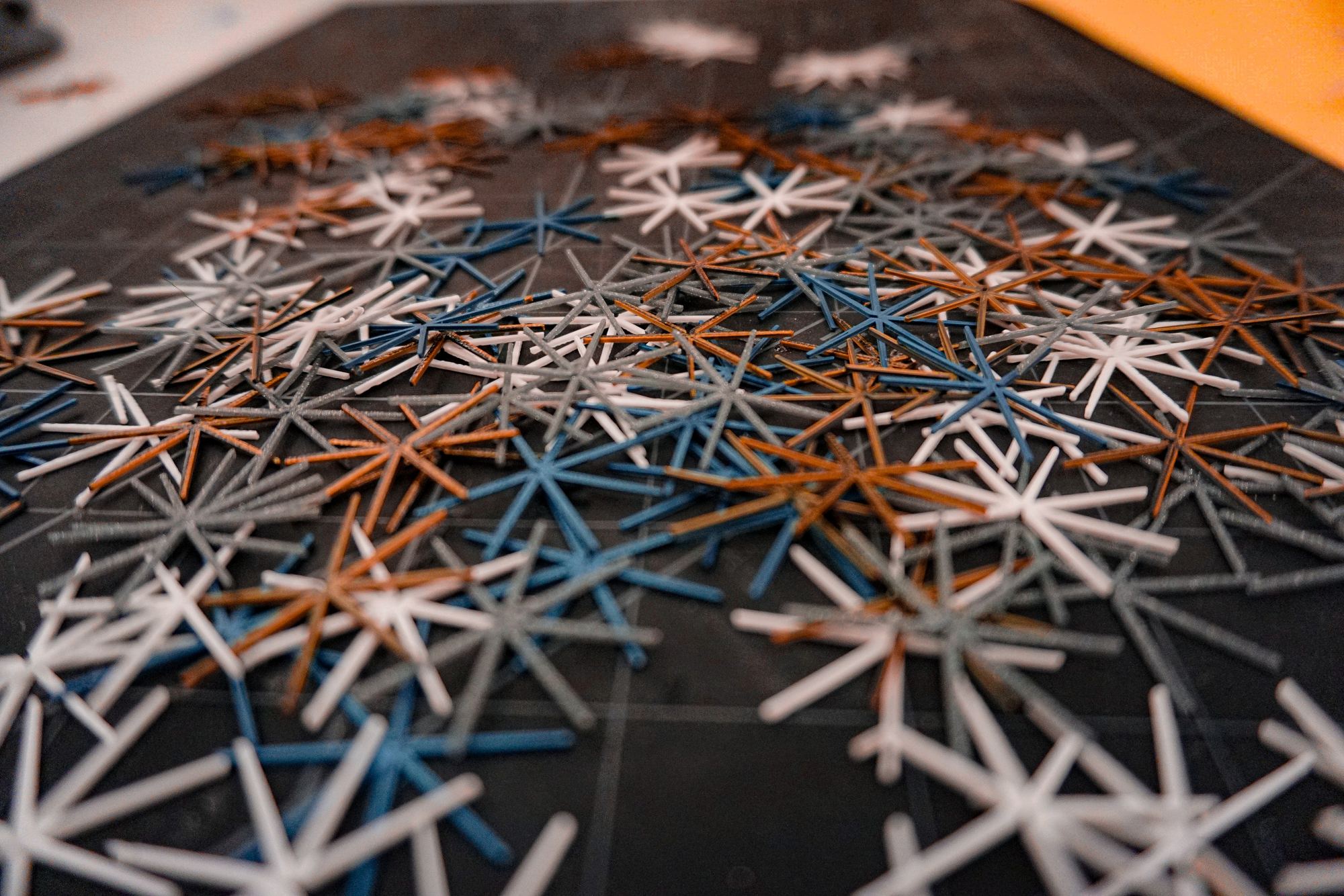
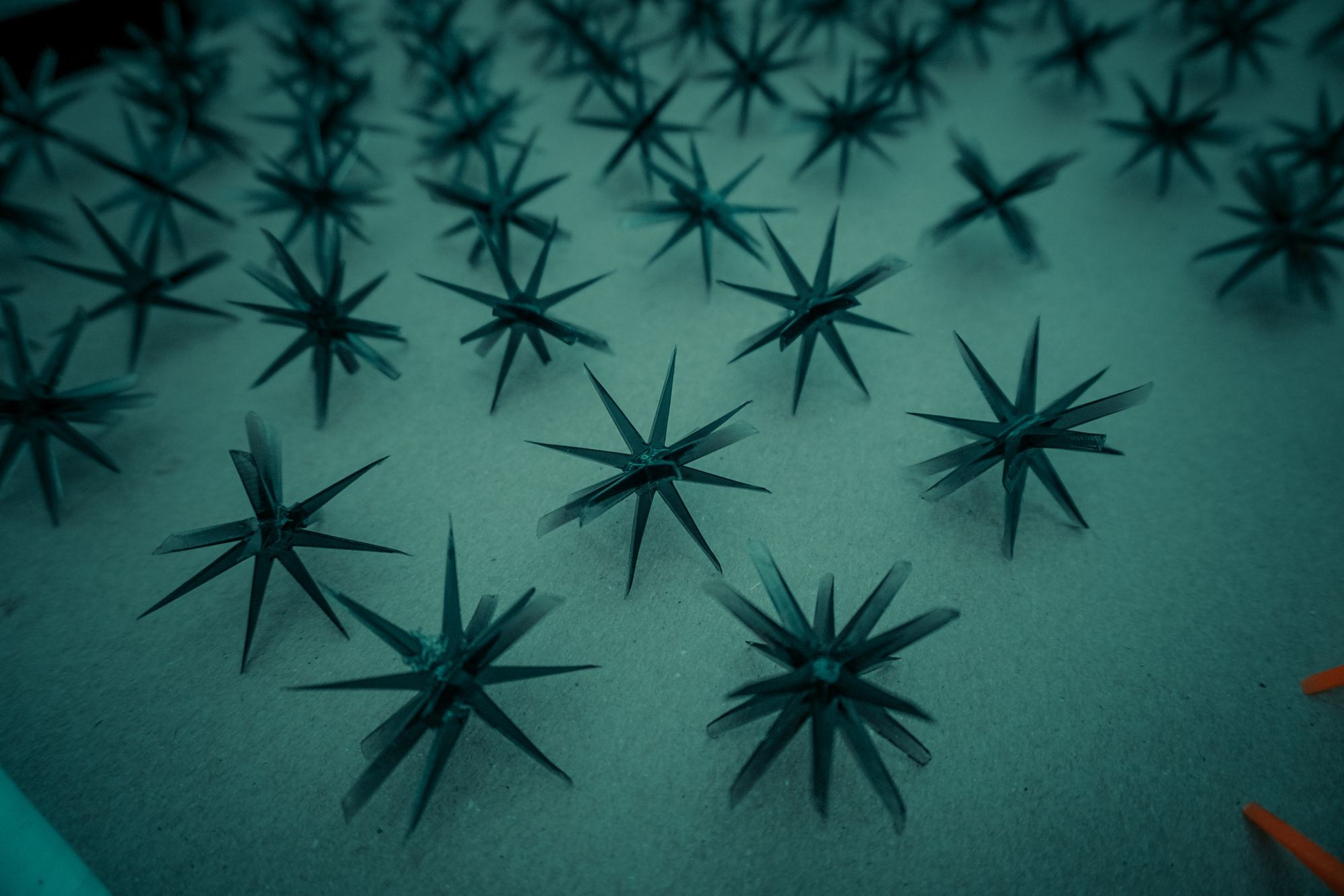
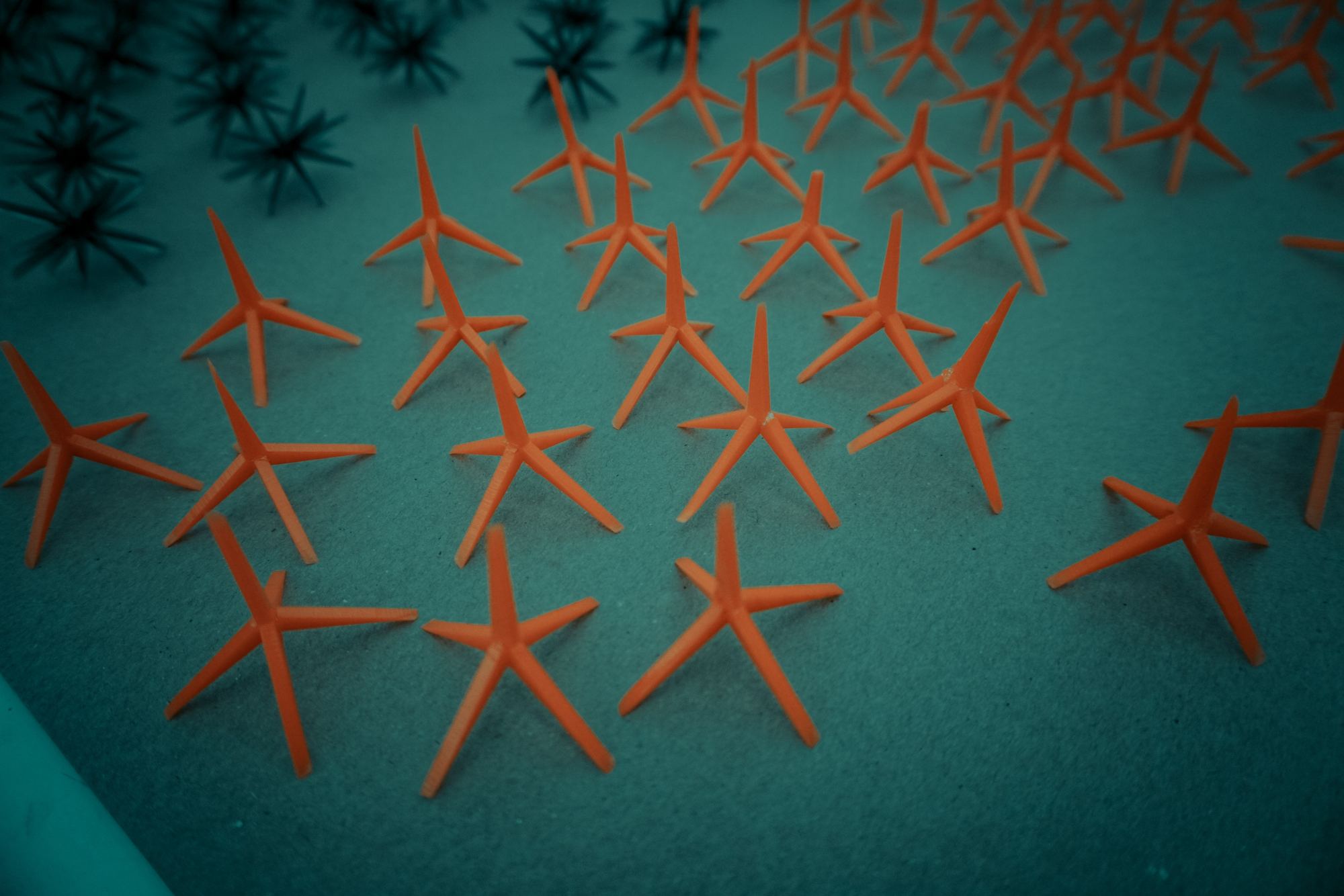
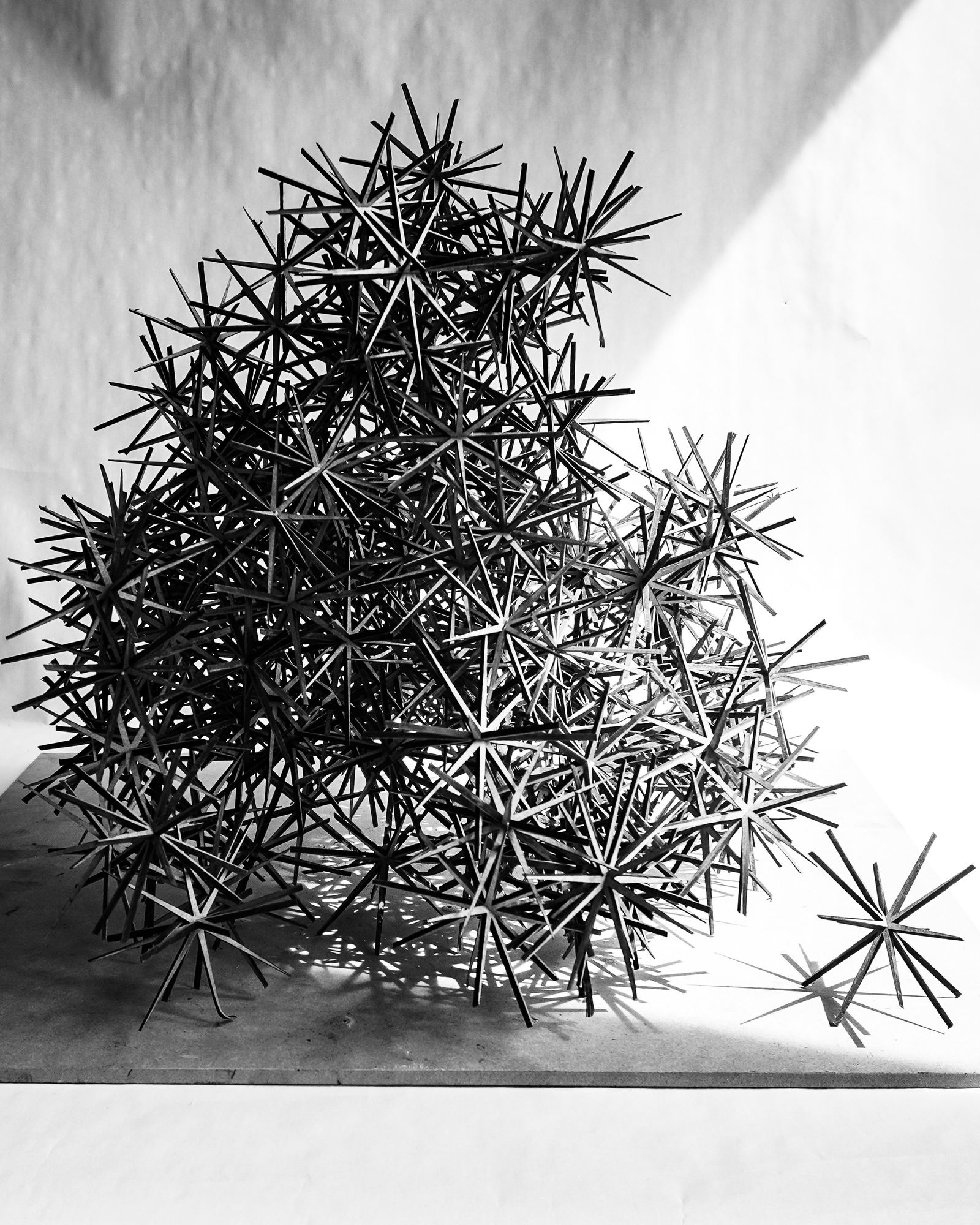
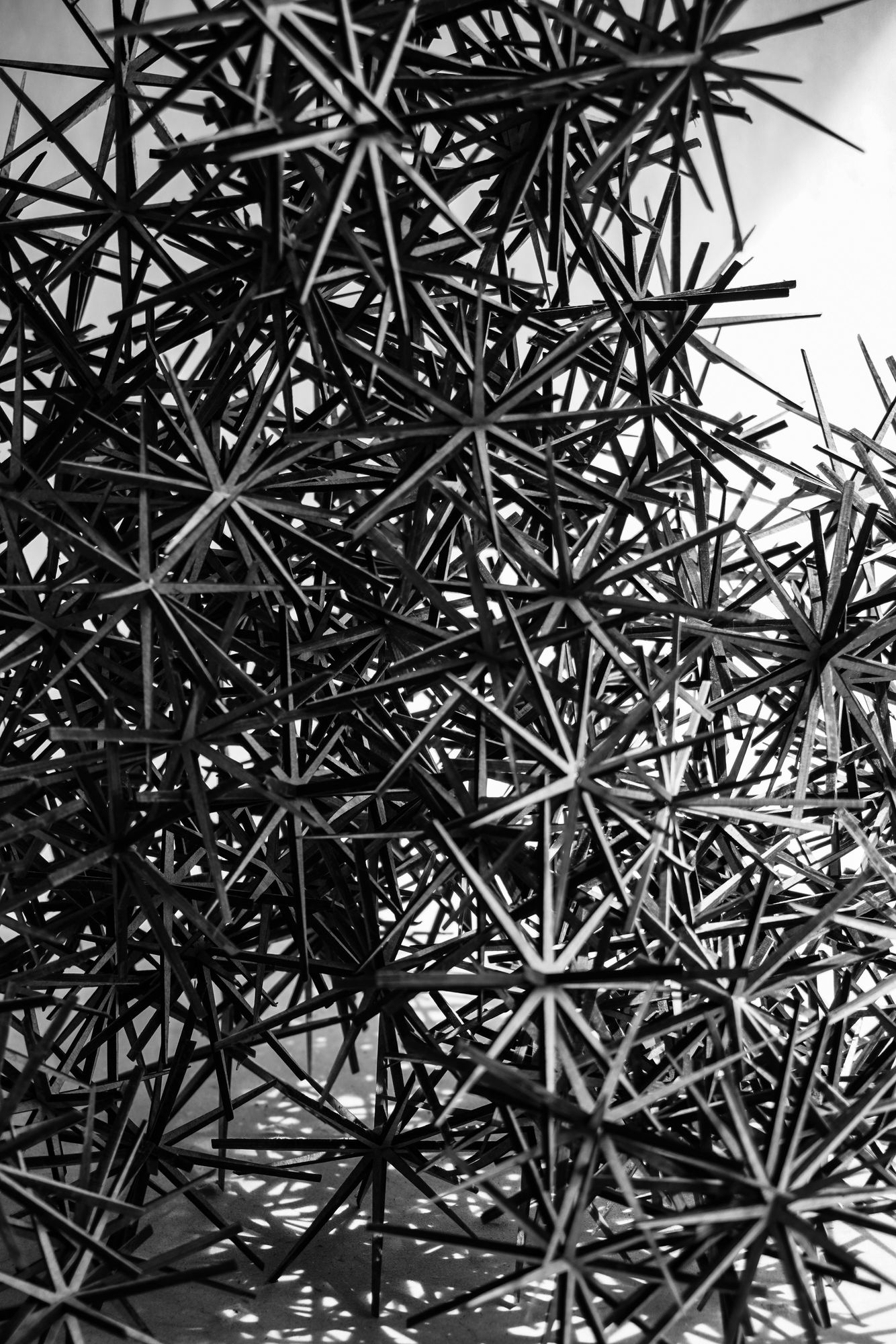
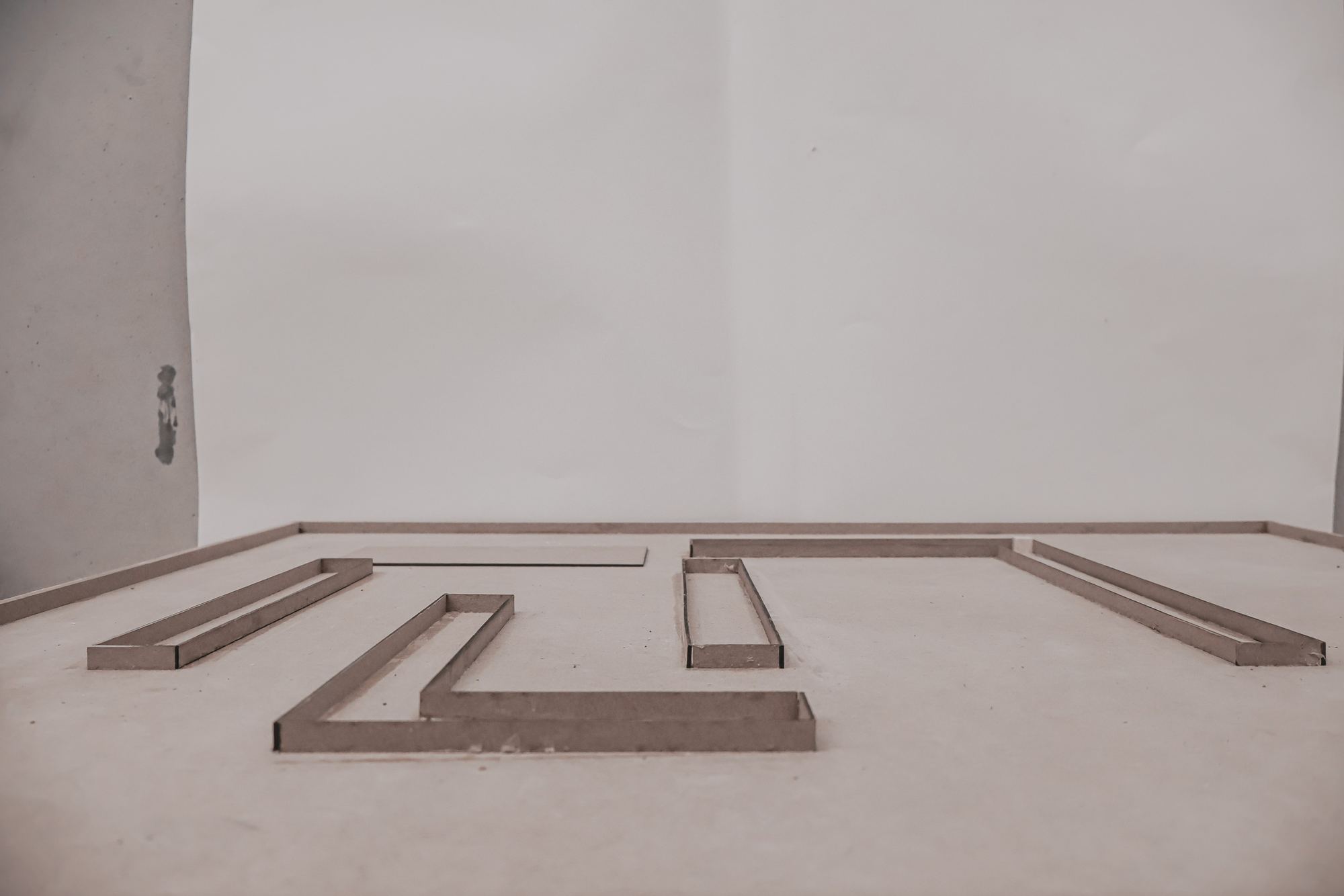
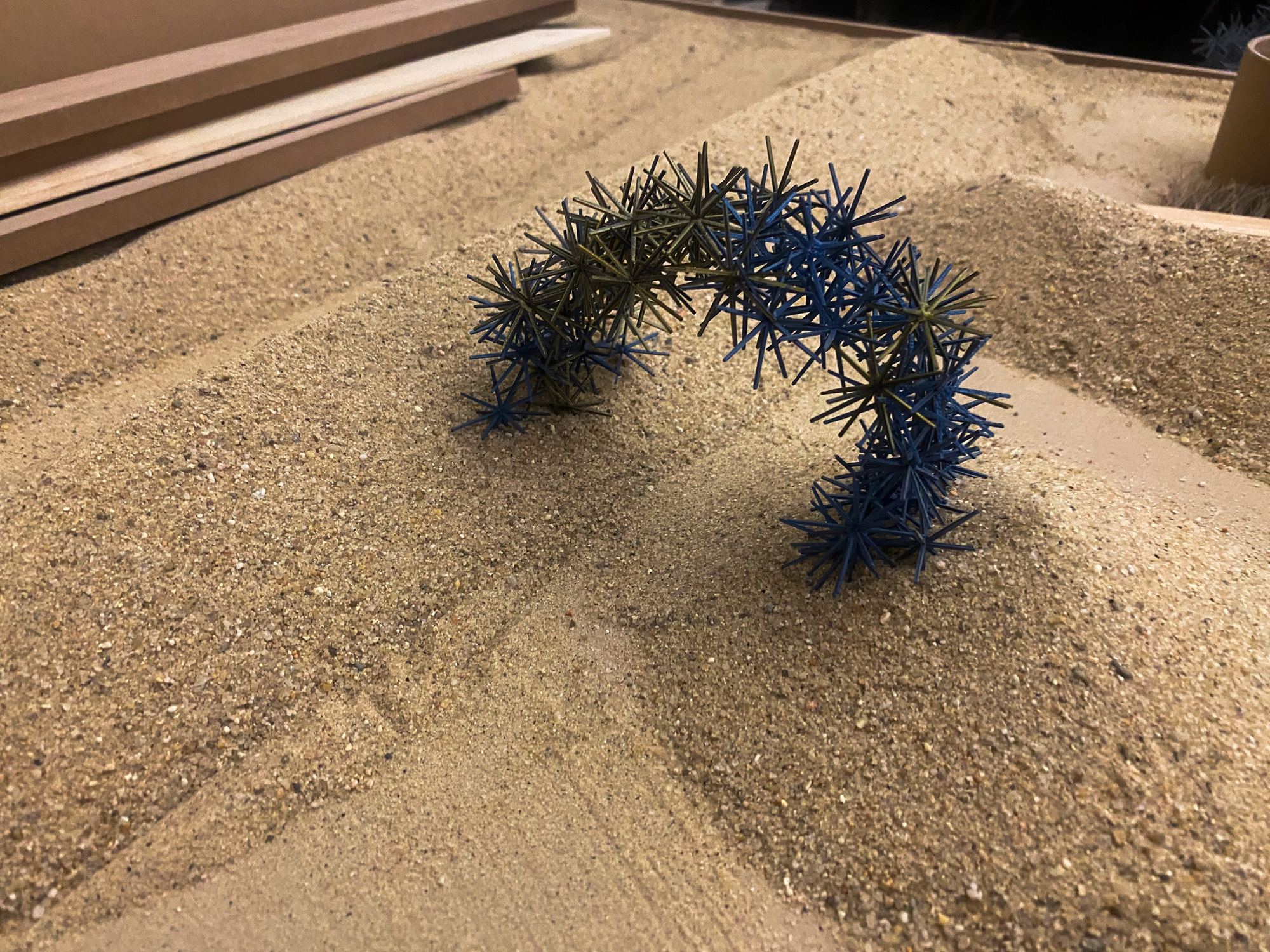
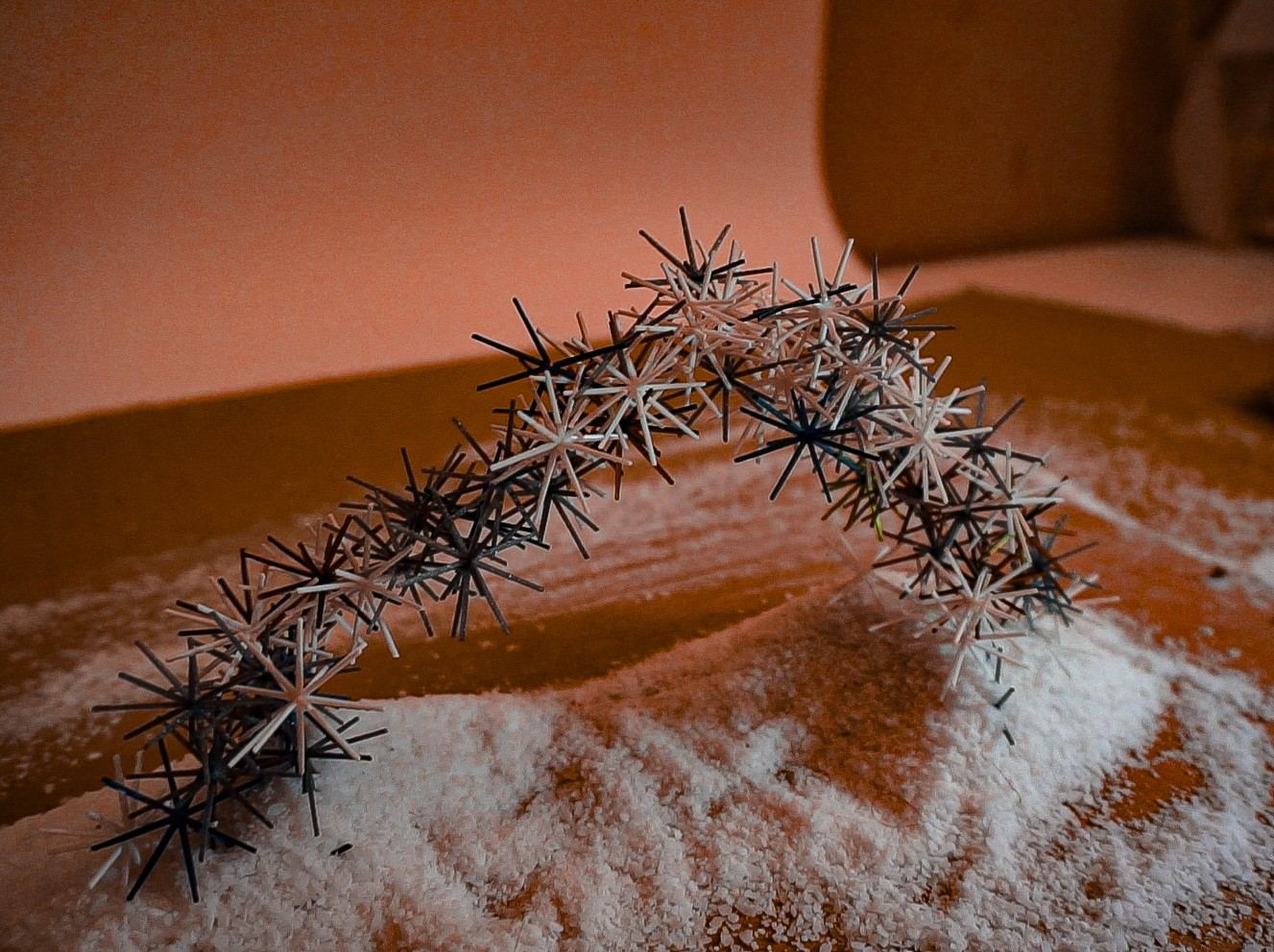
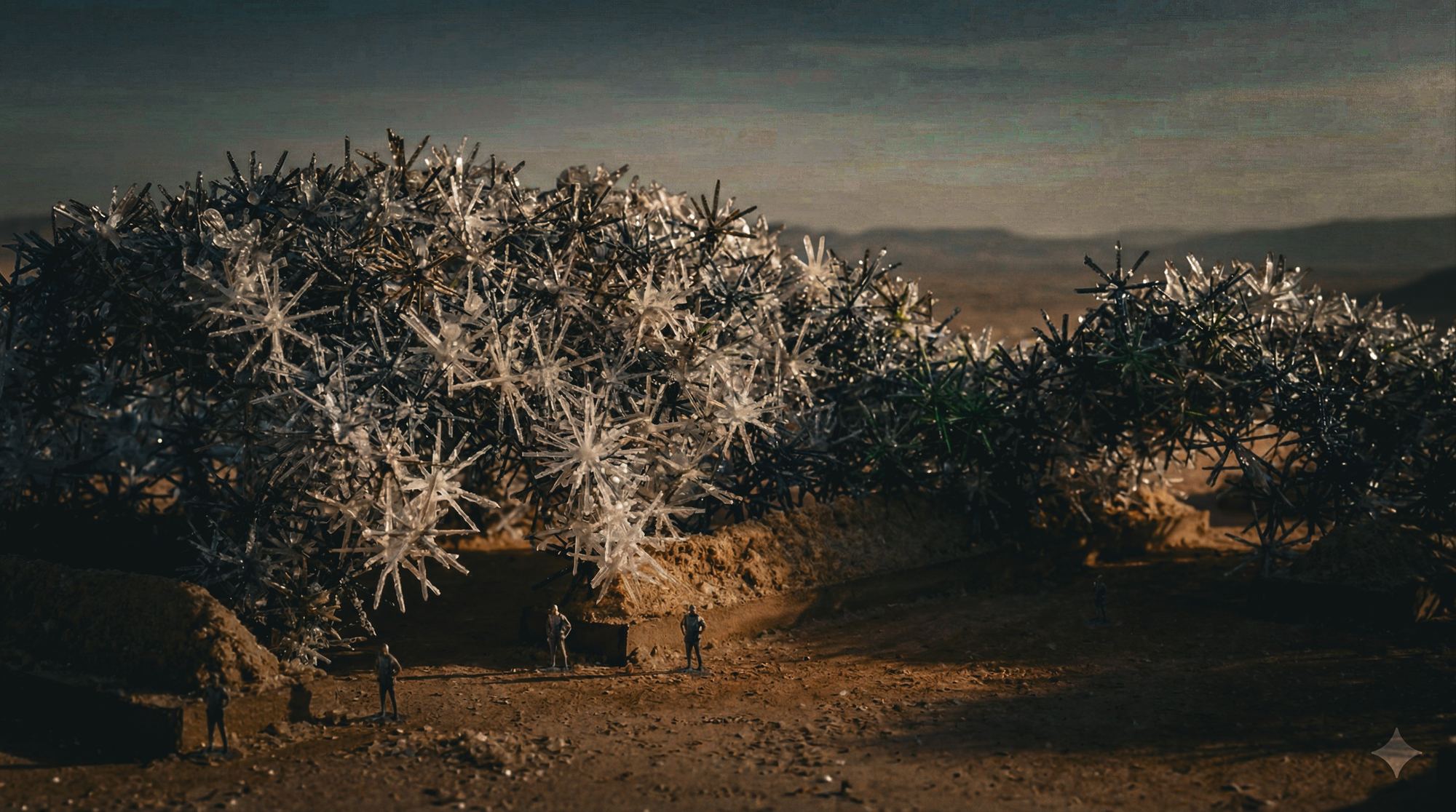
Hundreds of 3D-printed modules in several sizes and colours tested star-like elements, tripods, tetrapods and flat modules; the 14-spike star interlocked best into columns, arches and porous envelopes. On the model site the sand berms were laid out first, and the stars were then aggregated over them.
Module tests
Tests compared stars, tripods, tetrapods and flat modules. A 14-spike star close to the purple starthistle interlocked best, forming columns, arches and porous envelopes: longer arms add reach but lower density, sharper spikes improve grip, and higher density adds strength at the cost of material.
Salt and water solution spray testing: tests on modules and conditions.
Sand as formwork
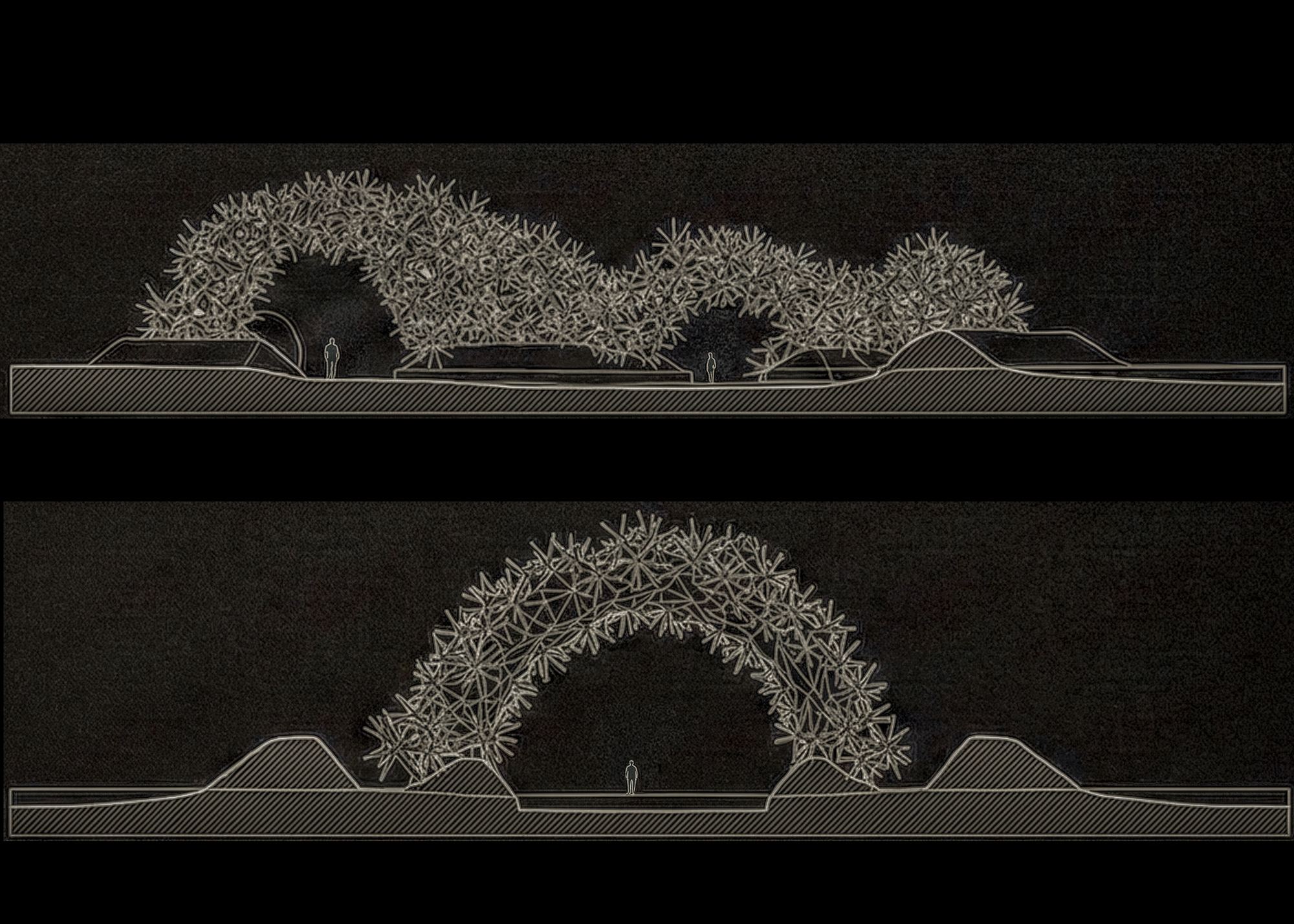
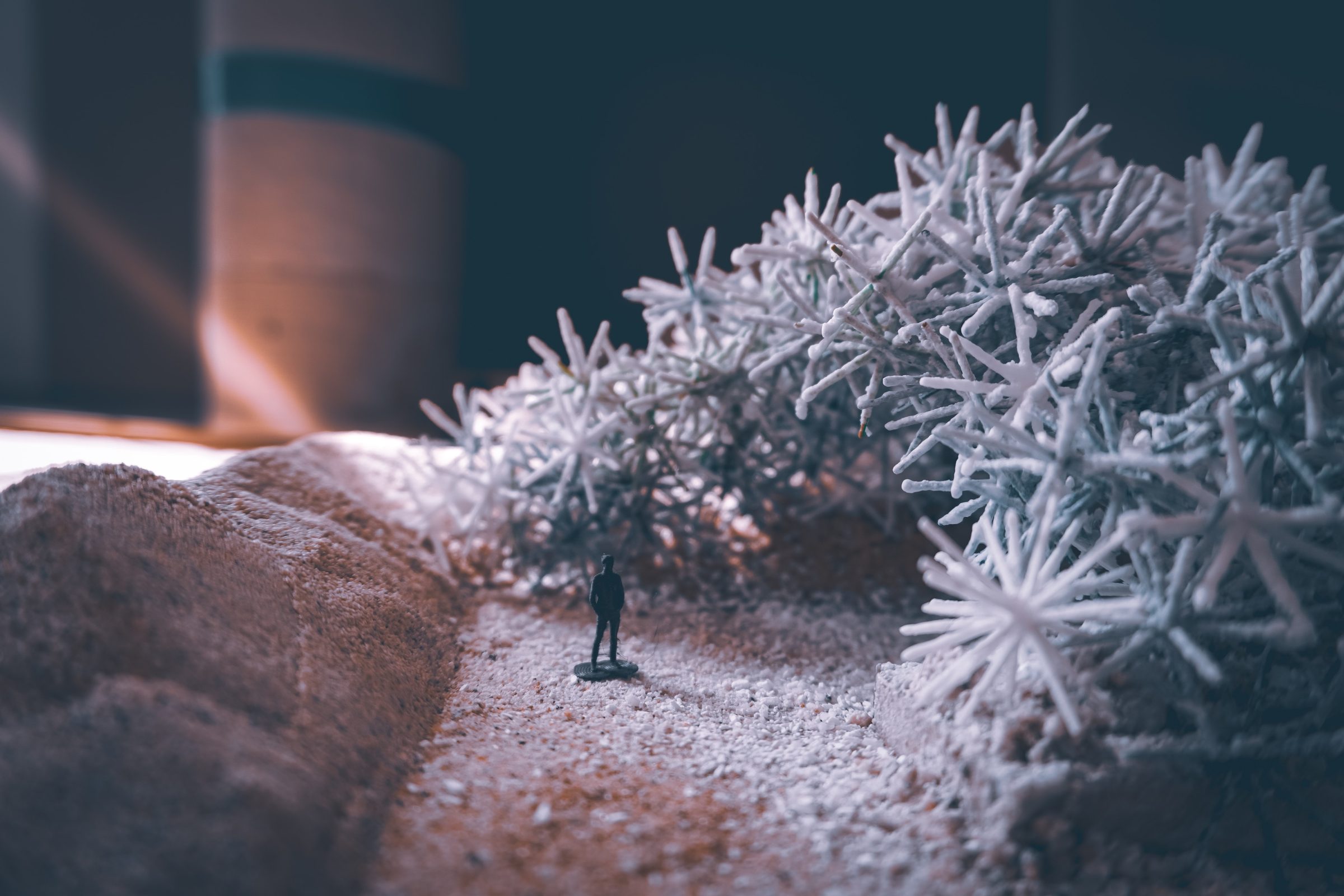
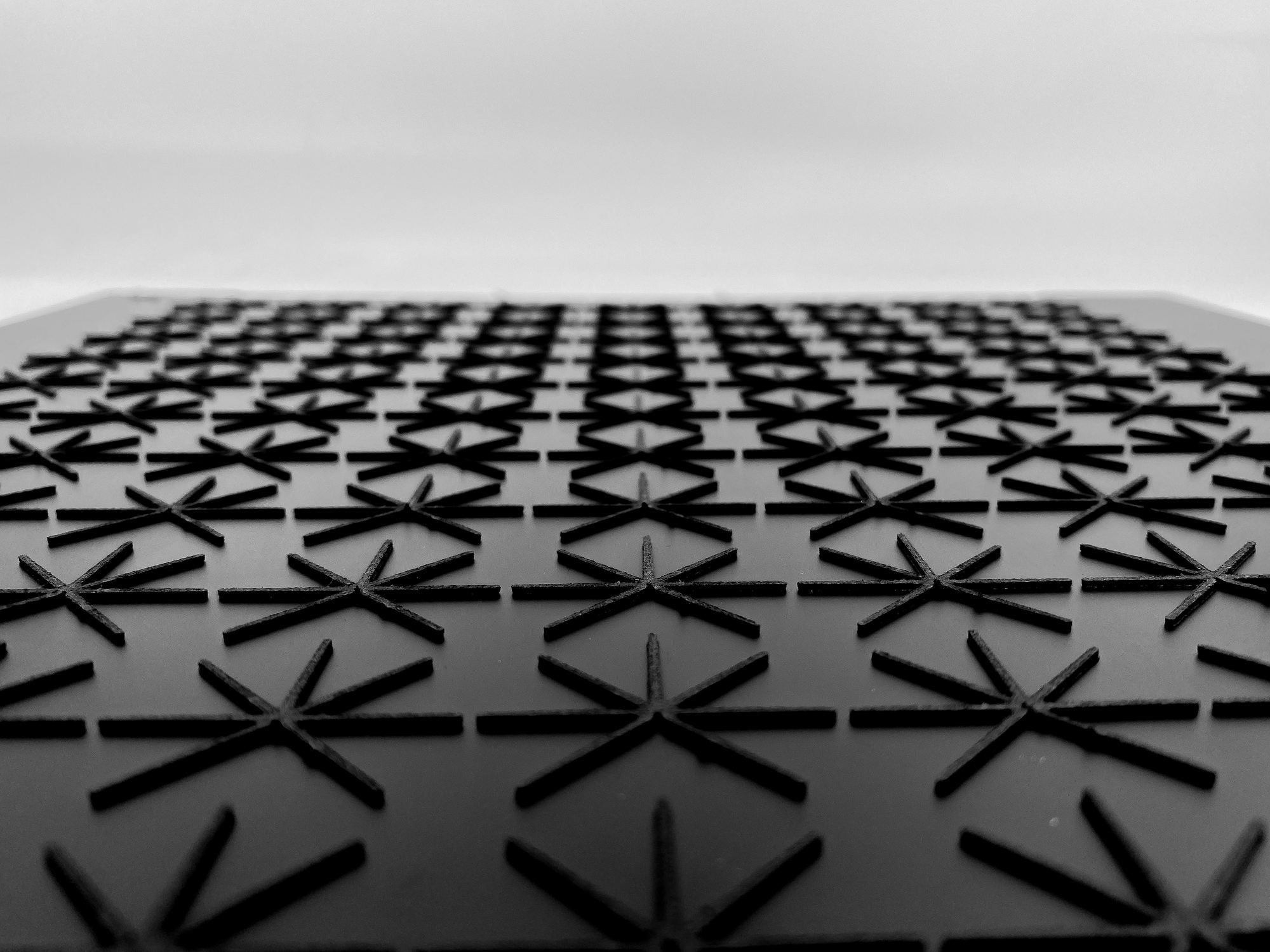
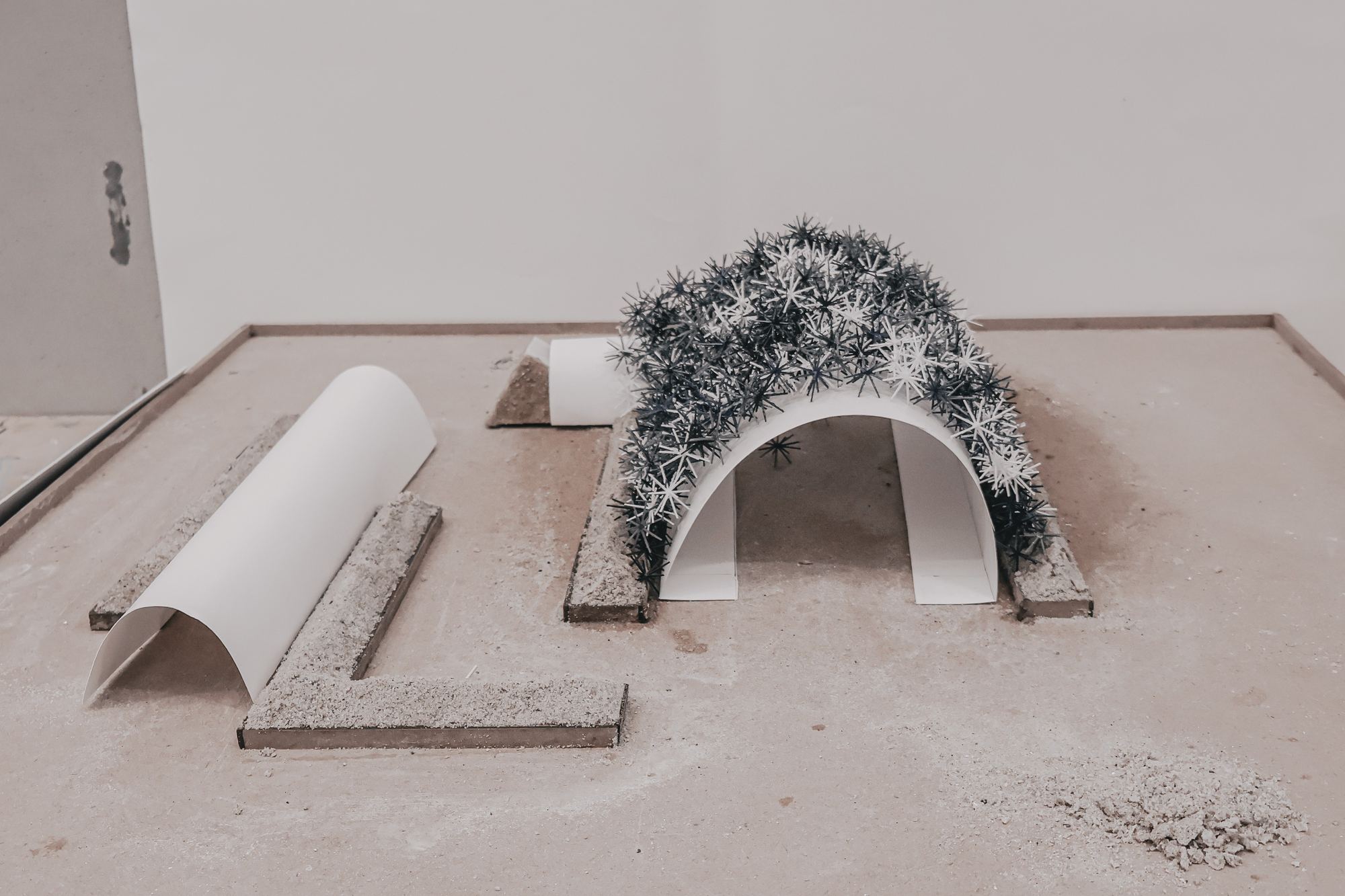
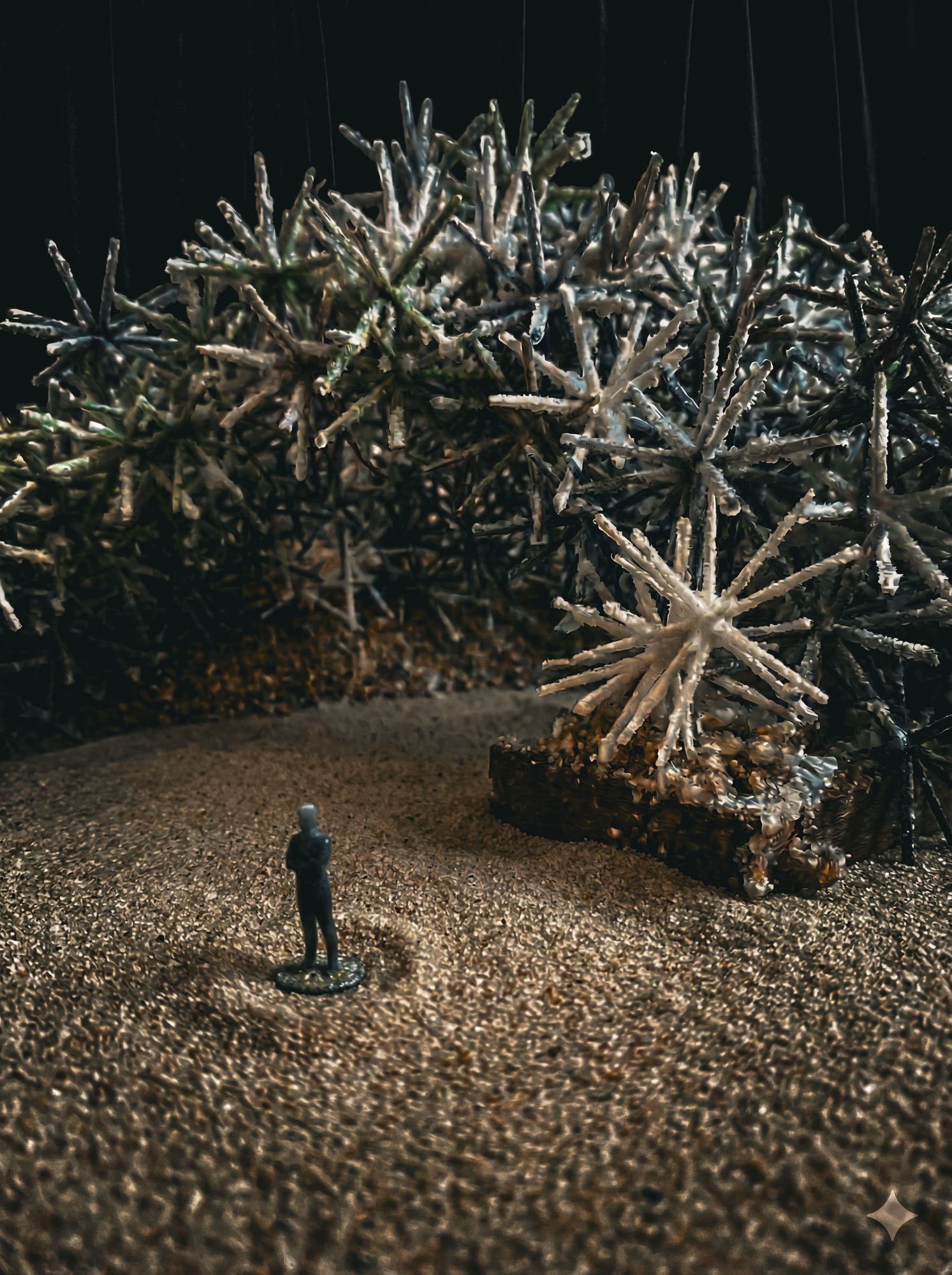
Hundreds of 3D-printed modules pushed the system toward stars about three metres across. Many aggregates failed until sand became temporary formwork: stars draped over sand mounds held as arches and semi-domes once it was removed, and sand became the foundation too.
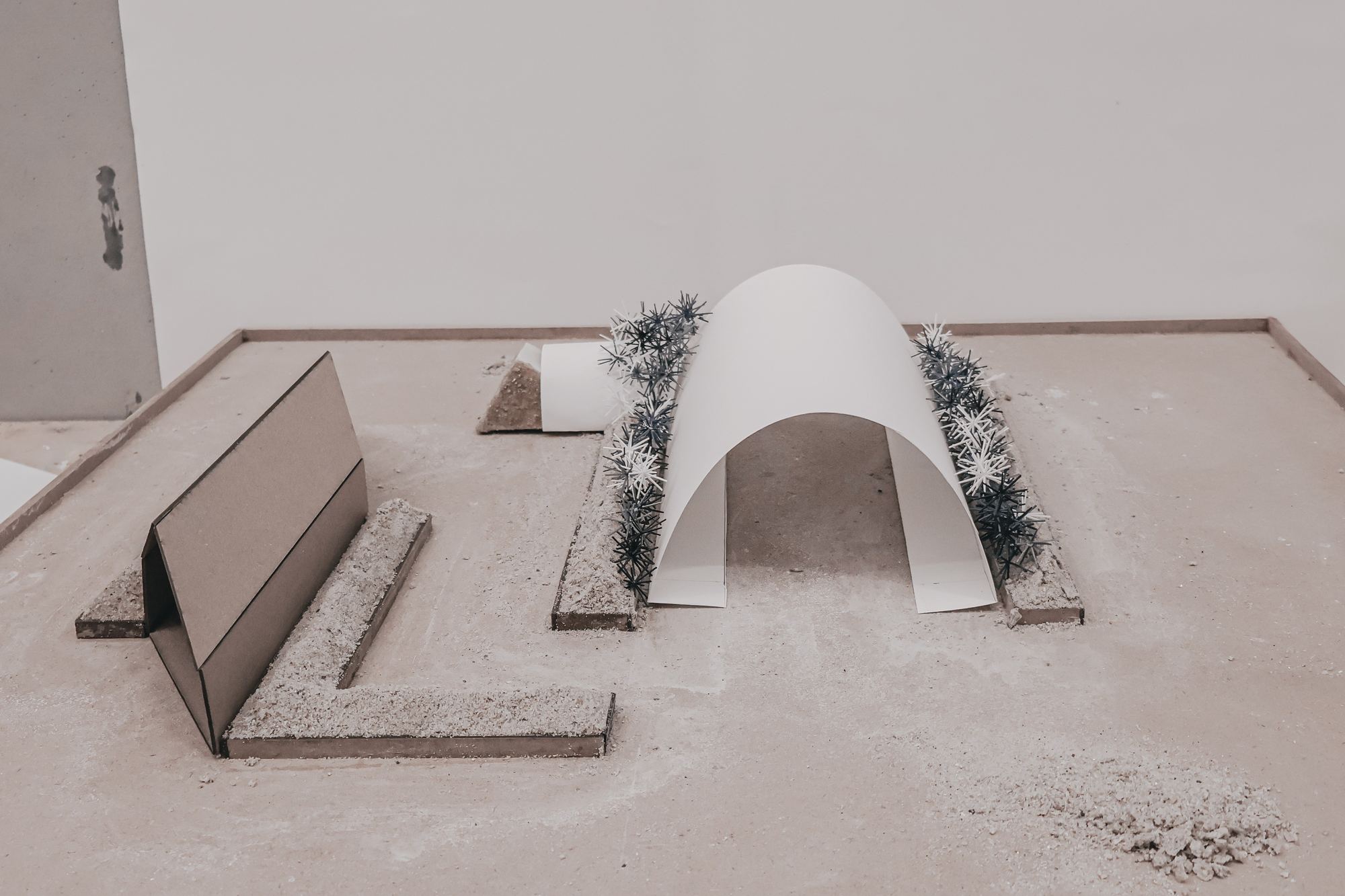
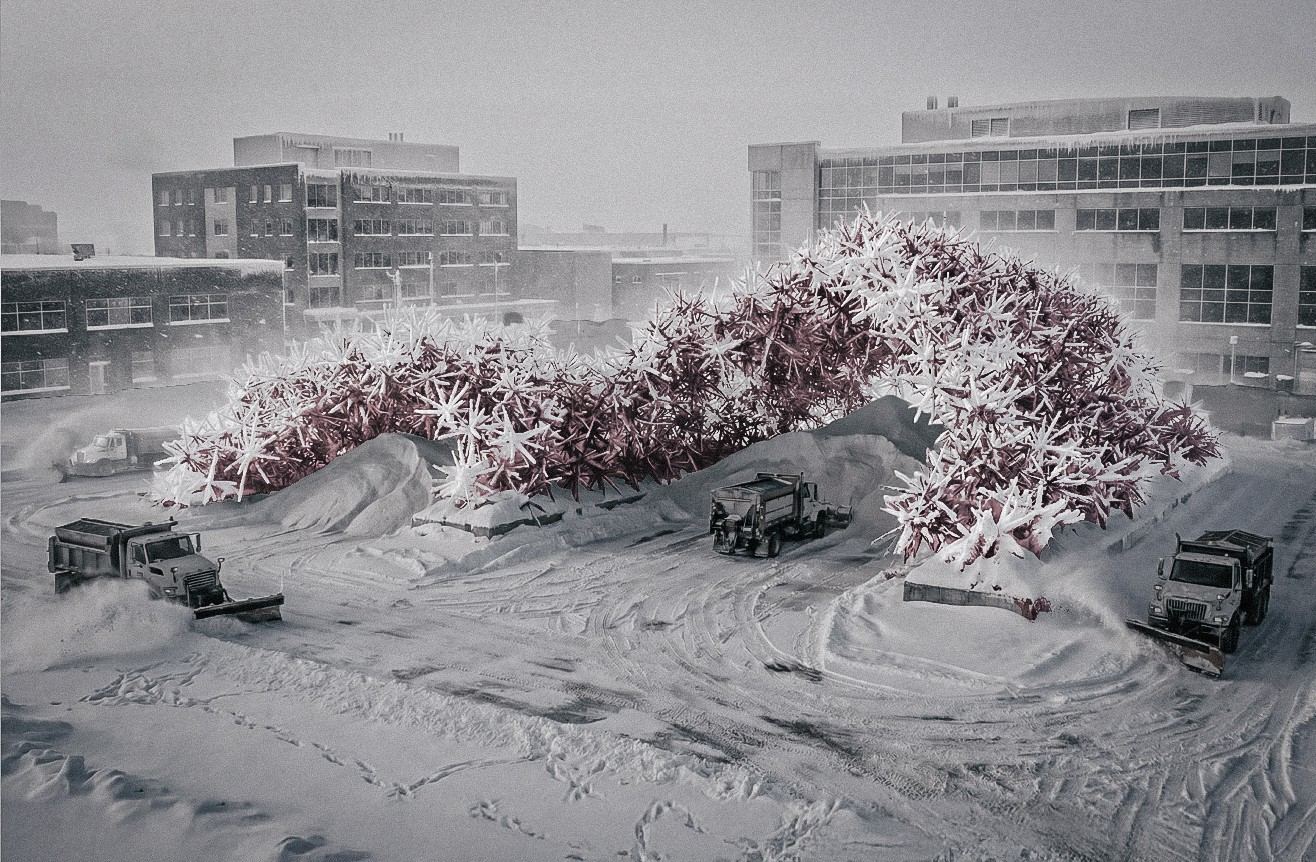
Site · the Everson Museum, Syracuse
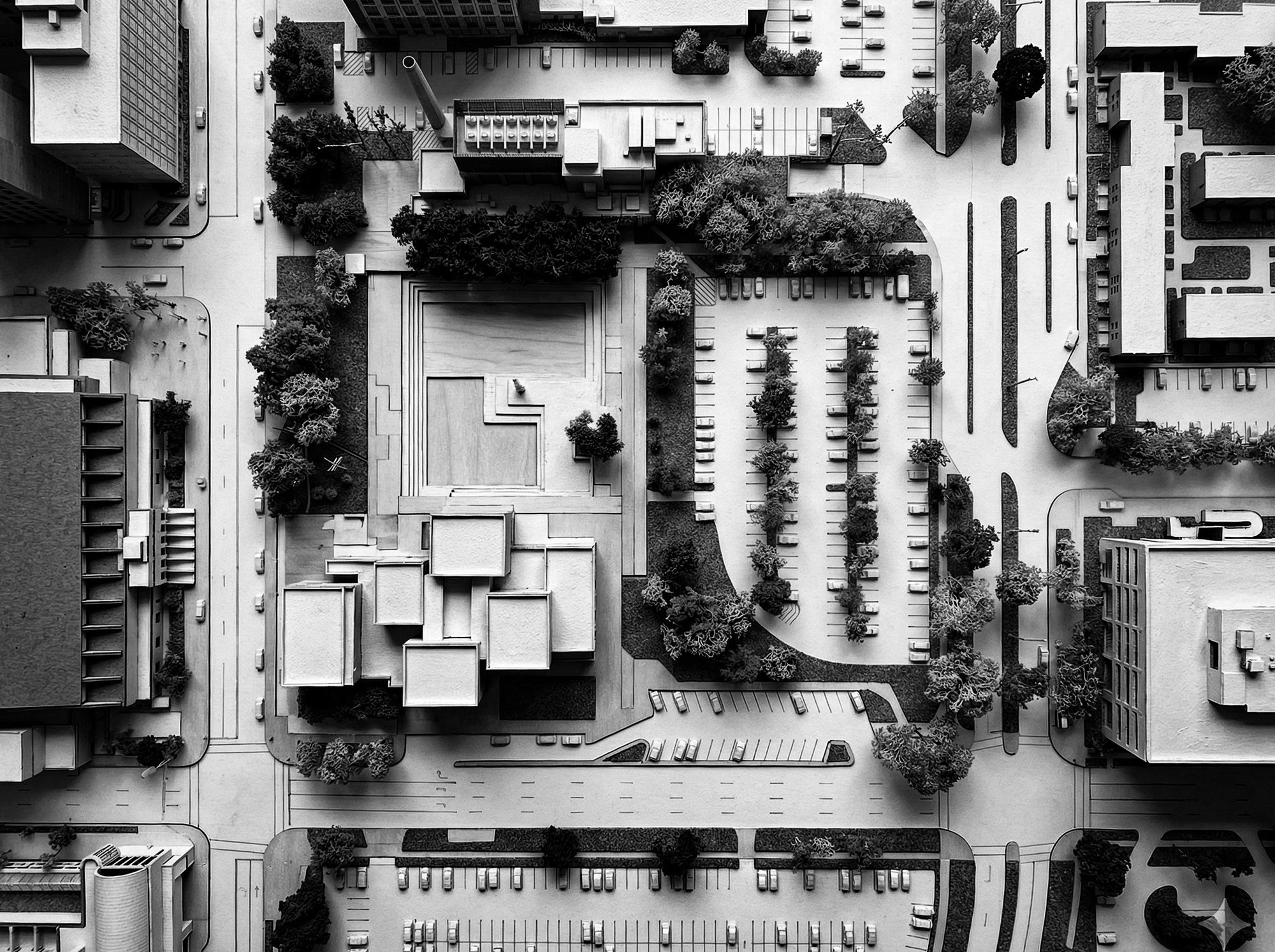
A salt shed and performance space beside the Everson Museum of Art in Syracuse, on the model site built around the sand berms.
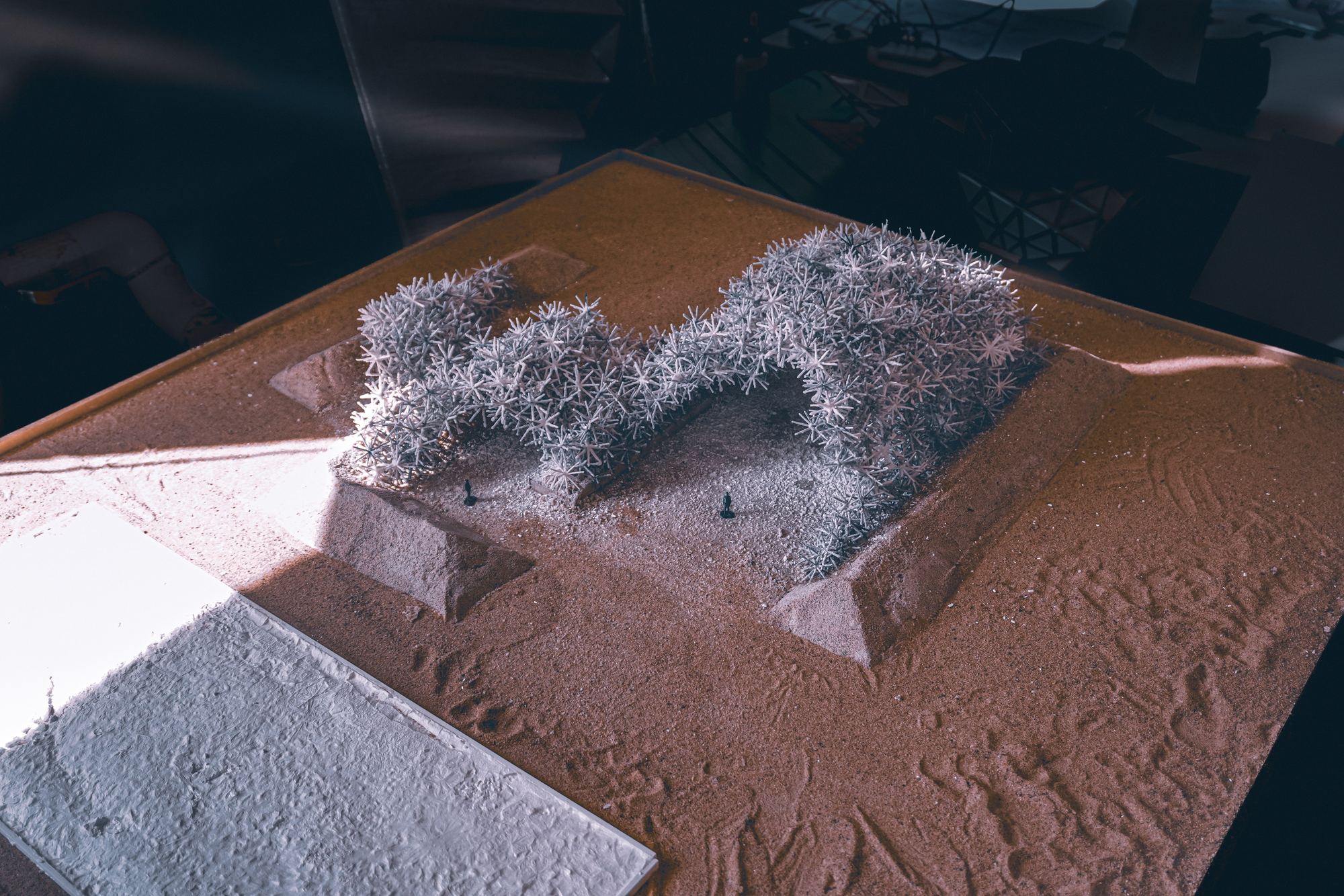
Sand, salt and light
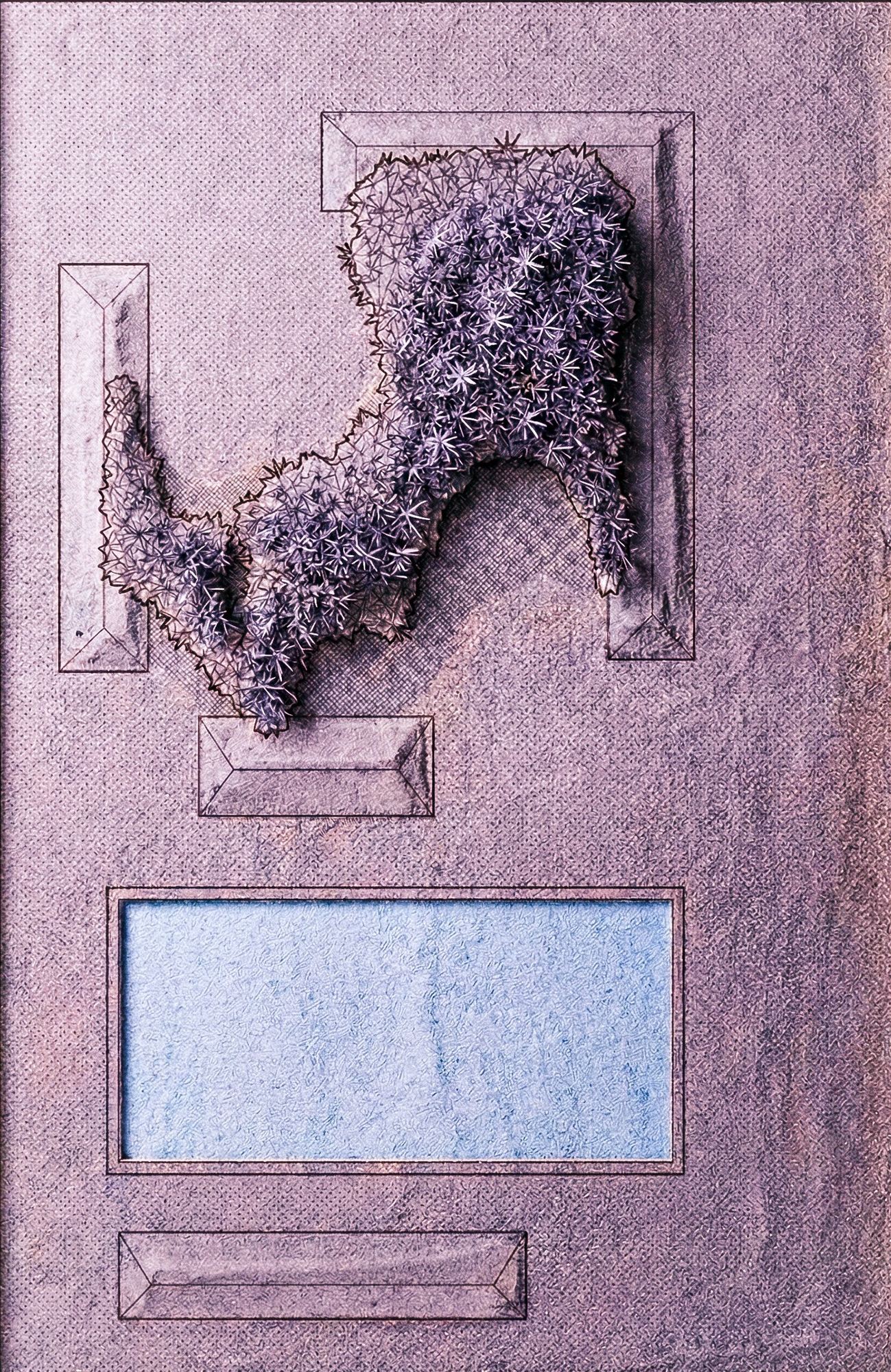
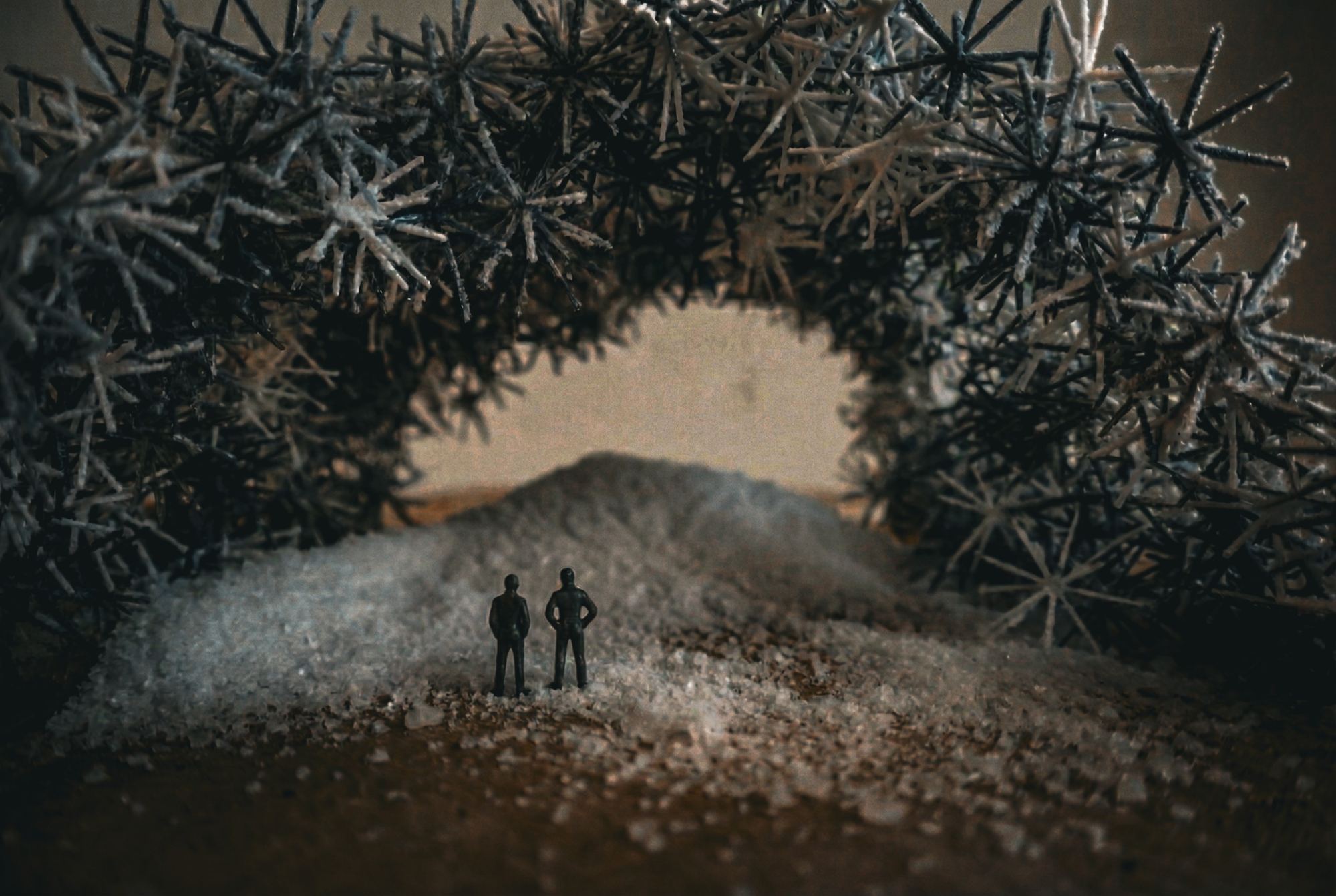
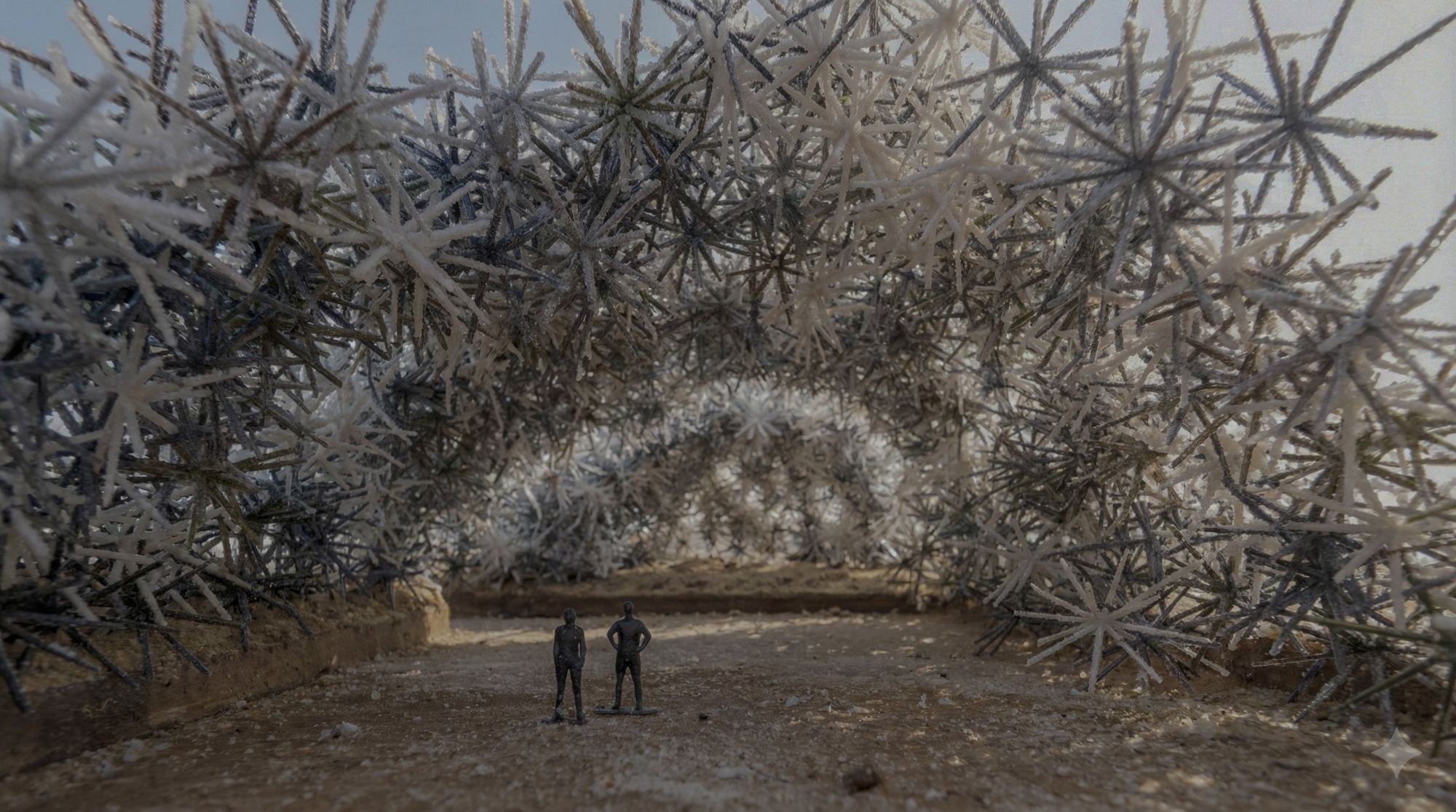
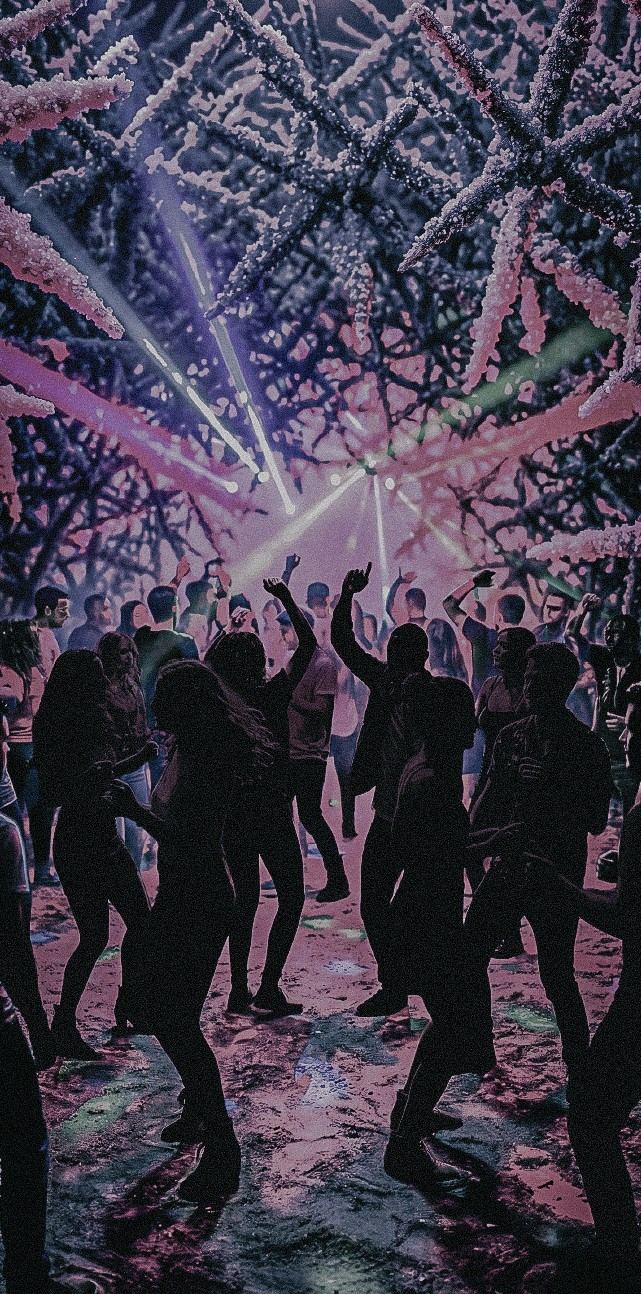
Inspired by Iran's salt caves, Yanhu Lake, the Everson Museum and Michael Heizer's earthworks, Saleria is a luminous, reversible architecture where structure emerges from aggregation rather than construction.
Sand became temporary formwork: stars draped over sand mounds formed stable arches and semi-domes once the sand was removed. The final system brings together aggregated stars, sand berms and salt crystallization in a luminous, reversible architecture.
Plan and sections